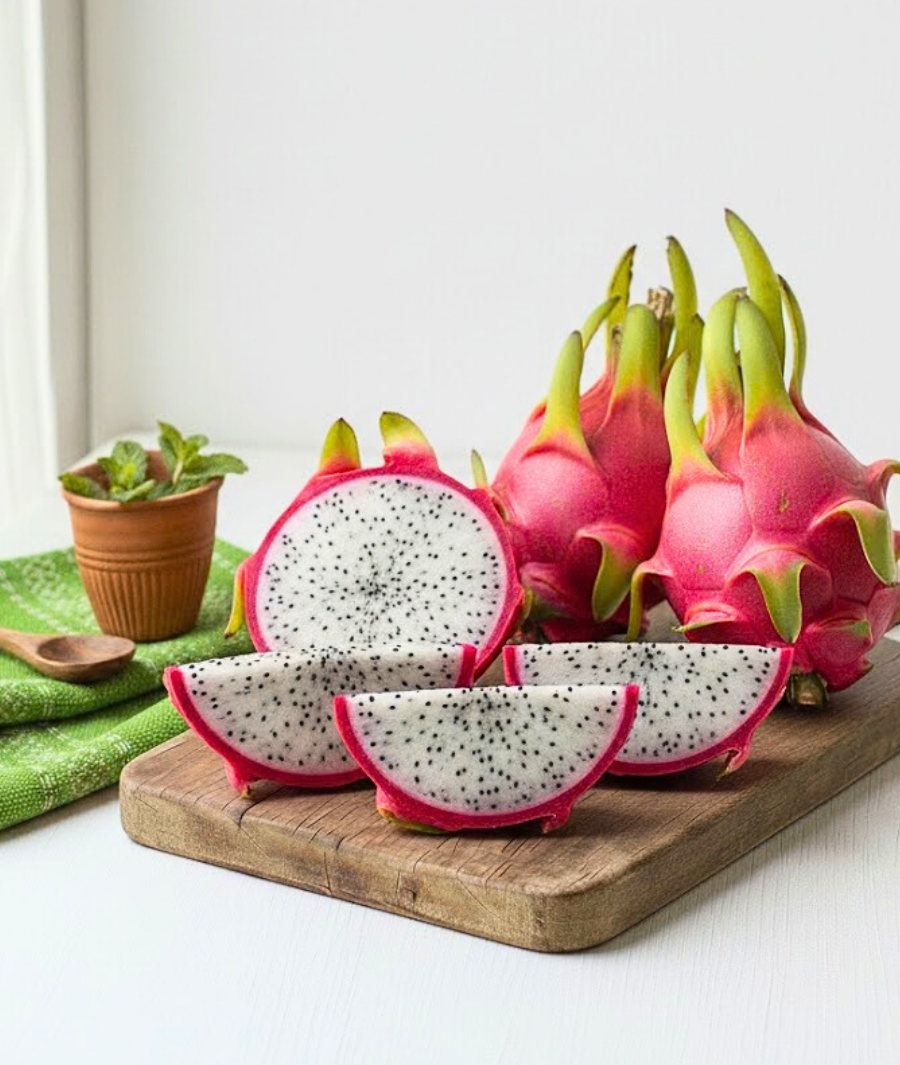
White Dragon Fruit
Hylocereus undatus
The most common and widely cultivated dragon fruit variety in the world, featuring a stunning contrast of vibrant hot-pink skin and snow-white flesh dotted with countless tiny black edible seeds. This variety represents over 80% of global dragon fruit production and is celebrated for its mild, refreshing taste and incredible health benefits. Native to Central America but now grown extensively across Vietnam, Thailand, and many tropical regions, white dragon fruit has become a staple superfood in markets worldwide.
About White Dragon Fruit
White Dragon Fruit (Hylocereus undatus) is most common and widely cultivated dragon fruit variety in the world, featuring a stunning contrast of vibrant hot-pink skin and snow-white flesh dotted with countless tiny black edible seeds. This variety represents over 80% of global dragon fruit production and is celebrated for its mild, refreshing taste and incredible health benefits. Native to Central America but now grown extensively across Vietnam, Thailand, and many tropical regions, white dragon fruit has become a staple superfood in markets worldwide.
Originating from Central America (Mexico, Guatemala), this remarkable fruit has captured the attention of health enthusiasts and food lovers worldwide. With its unique appearance resembling mythical dragon scales, this exotic fruit is not just a visual treat but also a nutritional powerhouse packed with essential vitamins, minerals, and antioxidants.
Whether you're looking to improve your health, add exotic flavors to your diet, or even grow your own tropical fruit garden,white dragon fruit offers an incredible journey into the world of superfoods. Let's explore everything you need to know about this fascinating fruit.
Physical Appearance
The visual characteristics of white dragon fruit make it instantly recognizable. From its distinctive skin to its unique internal structure, every aspect of this fruit's appearance tells a story of its evolutionary adaptation and tropical origins.
skin Color
Bright pink to deep magenta with green scales
flesh Color
Pure white with tiny black seeds
shape
Oval to oblong
size
10-15 cm in length
weight
150-600 grams
Nutrition Facts (per 100g)
White Dragon Fruit is remarkably low in calories yet incredibly nutrient-dense, making it an ideal choice for health-conscious individuals. With only 60 calories per 100 grams, this fruit provides substantial amounts of fiber, vitamins, and minerals without compromising your daily caloric goals. The natural sugars present are balanced by the high fiber content, ensuring a steady release of energy rather than sudden spikes in blood sugar levels.
| calories | 60 |
| carbs | 13g |
| fiber | 3g |
| protein | 1.2g |
| fat | 0.4g |
| vitamin C | 9mg (15% DV) |
| iron | 0.74mg (4% DV) |
| magnesium | 40mg (10% DV) |
| calcium | 18mg (2% DV) |
Amazing Health Benefits
Beyond its exotic appearance and delicious taste, white dragon fruit is scientifically recognized as a true superfood. Rich in antioxidants, prebiotics, and essential nutrients, this fruit has been studied extensively for its potential to support various aspects of human health. From boosting immunity to promoting digestive health, the benefits of incorporating this fruit into your diet are backed by both traditional wisdom and modern nutritional science. Here's a comprehensive look at why health experts around the world recommend adding white dragon fruit to your daily nutrition:
🛡️ Boosts Immune System: High in Vitamin C and antioxidants that strengthen immunity
🌱 Aids Digestion: Rich in dietary fiber and prebiotics for gut health
⚖️ Supports Weight Loss: Low in calories (60 per 100g) and high in fiber
❤️ Heart Health: Contains betalains that reduce bad cholesterol (LDL)
✨ Skin Health: Antioxidants fight free radicals and promote collagen production
🩸 Regulates Blood Sugar: Low glycemic index helps manage diabetes
🦴 Bone Strength: Good source of calcium and magnesium for bone health
💧 Hydration: 80% water content keeps you hydrated
Ideal Growing Conditions
White Dragon Fruit is a member of the cactus family (Cactaceae), which means it has evolved to thrive in specific environmental conditions. Understanding these requirements is crucial whether you're planning to grow this fruit commercially or in your home garden. Unlike many fruits that demand constant attention, dragon fruit plants are relatively resilient and can adapt to various conditions once established. However, providing optimal conditions will ensure healthy growth, abundant flowering, and maximum fruit production. The plant typically takes 6-18 months from cutting; 2-3 years from seed to produce its first fruits, making patience and proper care essential ingredients for success.
Sunlight
Full sun (6-8 hours daily), can tolerate partial shade
Water
Moderate; water once a week, reduce in winter
Climate
Tropical and subtropical climates; can tolerate drought
Temperature
65-85°F (18-29°C)
Soil Type
Well-draining sandy loam with pH 6.0-7.0
Complete Growing Guide: How to Grow White Dragon Fruit
Can be grown from seeds or cuttings (cuttings are faster)
Growing your own white dragon fruit can be an incredibly rewarding experience. Not only will you enjoy the satisfaction of harvesting exotic fruits from your own garden, but you'll also save money compared to purchasing these premium fruits from markets. The key to success lies in understanding the plant's needs at each growth stage and providing consistent care. While the plant is relatively low-maintenance once established, the initial setup and first year require attention to detail. Follow this comprehensive step-by-step guide to successfully cultivate your own dragon fruit plant:
1️⃣ Choose Cuttings: Get 12-15 inch healthy stem cuttings
2️⃣ Dry the Cutting: Let it dry for 3-5 days to prevent rot
3️⃣ Prepare Soil: Mix cactus soil with compost for drainage
4️⃣ Plant: Insert cutting 4 inches deep in soil
5️⃣ Support Structure: Provide trellis or pole for climbing
6️⃣ Water: Water lightly until roots establish (2-3 weeks)
7️⃣ Fertilize: Apply organic fertilizer every 2 months
8️⃣ Wait: First fruits appear in 6-18 months
💡 Care Tips
- ✓✂️ Prune dead branches to encourage growth
- ✓🐛 Watch for mealybugs and scale insects
- ✓❄️ Protect from frost (plant dies below 32°F/0°C)
- ✓🌙 Dragon fruit blooms at night; hand pollination may increase yield
- ✓📦 Use well-draining pots if growing in containers
Origin & Global Availability
The fascinating journey of white dragon fruit from its native habitat to global markets is a testament to human agricultural innovation and the fruit's remarkable adaptability. Originally discovered in Central America (Mexico, Guatemala), this fruit has traveled across continents and oceans to become one of the most sought-after exotic fruits worldwide. Today, dragon fruit cultivation has expanded to over 20 countries, with Vietnam leading global production and export. The fruit's popularity has surged in recent years due to growing awareness of its health benefits and the rise of social media showcasing its photogenic appeal. Understanding where and when this fruit is available helps consumers make informed purchasing decisions and appreciate the global agricultural network that brings this exotic treasure to their tables.
🌍 Native Region
Central America (Mexico, Guatemala)
📅 Availability
Year-round in tropical regions; summer peak in temperate zones
🌏 Major Producers
Taste Profile & Flavor Experience
The taste of white dragon fruit is often described as a delightful surprise – subtle yet refreshing, unique yet familiar. Its sweetness level of mildly sweet (less sweet than red variety), this fruit offers a flavor profile that appeals to a wide range of palates. The texture is soft, juicy, similar to kiwi, creating a pleasant eating experience that's often compared to a cross between kiwi and pear. The tiny black seeds add a slight crunch, reminiscent of kiwi fruit, and are completely edible, contributing healthy omega fatty acids to your diet. Whether enjoyed fresh, blended into smoothies, or incorporated into desserts, white dragon fruit provides a unique tropical taste sensation.
sweetness
Mildly sweet (less sweet than red variety)
texture
Soft, juicy, similar to kiwi
flavor
Subtle, slightly tangy with hints of pear and kiwi
How to Eat & Prepare White Dragon Fruit
Preparing and eating white dragon fruit is incredibly simple, making it an accessible exotic fruit for everyone. The entire process takes less than a minute once you know the proper technique. Here's the easiest method:
Simple 3-Step Method:
- 1. Cut in Half: Place the fruit on a cutting board and slice it lengthwise down the middle with a sharp knife.
- 2. Scoop or Peel: Use a spoon to scoop out the flesh, or peel back the skin like a banana (the skin is not edible).
- 3. Enjoy: Eat the white/colored flesh along with the tiny black seeds – they're completely edible and nutritious!
Culinary Uses & Recipe Ideas
White Dragon Fruit is incredibly versatile in the kitchen. Its mild flavor and beautiful appearance make it perfect for both sweet and savory applications. Here are popular ways to enjoy this exotic fruit:
🥤 Beverages
- • Smoothie bowls (Instagram favorite!)
- • Fresh fruit juices and smoothies
- • Cocktails and mocktails
- • Fruit-infused water
🍰 Desserts
- • Fruit salads and parfaits
- • Ice cream and sorbet
- • Cakes and tarts
- • Jellies and jams
🥗 Fresh & Raw
- • Eaten fresh as a snack
- • Fruit platters
- • Salads (sweet or savory)
- • Breakfast toppings
🍳 Creative Uses
- • Salsa and chutneys
- • Frozen popsicles
- • Yogurt mix-ins
- • Garnishes for dishes
💡 Pro Tip: For the best taste, consume white dragon fruit when it's slightly soft to the touch. If too firm, let it ripen at room temperature for 1-2 days. Refrigerate ripe fruits and consume within 3-5 days.
🎉 Fascinating Fun Facts
🌵 Dragon fruit is actually a type of cactus!
🌸 The flowers bloom for only ONE NIGHT and wilt by morning
🐉 The name comes from its scaly skin resembling dragon scales
💎 In Asia, it's called "Pitaya" or "Strawberry Pear"
🎨 The pink skin contains natural dye used in cosmetics
🌙 It's one of the few fruits that bloom at night